




What Happens When AI Starts Buying For Your Customers?
The first phase of AI shopping was about recommendation. ChatGPT or Gemini would suggest a product, and the customer would go buy it.
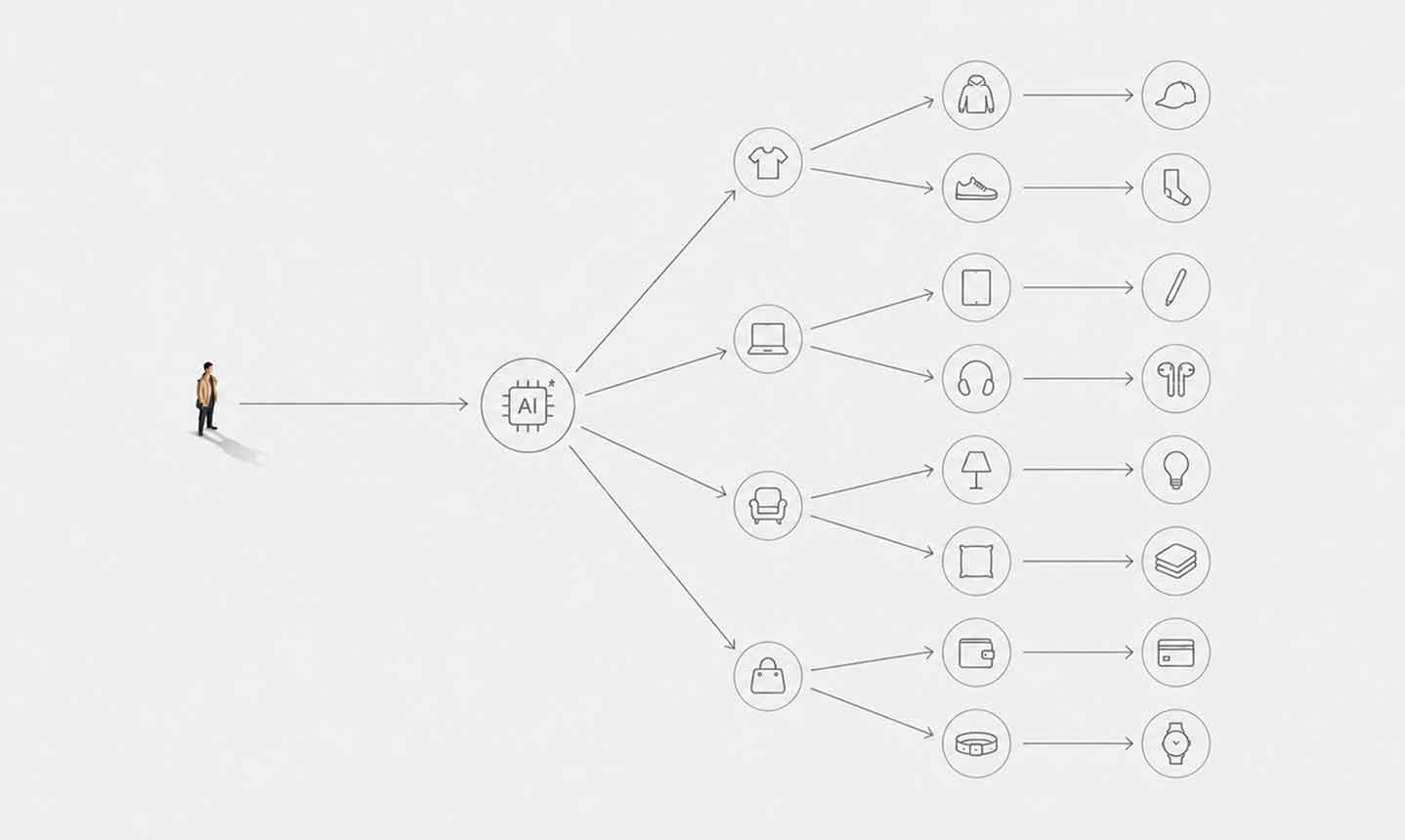
The next phase is about action. AI isn’t just suggesting anymore. It’s starting to filter, compare, reserve, and (in some cases) purchase; all on behalf of the customer.
This is what’s called agentic commerce. And it’s not a future state. The infrastructure is already live.
What’s live now
In September 2025, OpenAI and Stripe launched the Agentic Commerce Protocol (ACP); an open-source standard that lets merchants integrate directly with ChatGPT for in-chat transactions. Etsy, Shopify, Walmart, and Instacart were on at launch.
In January 2026, Google announced its competing Universal Commerce Protocol (UCP), built with Shopify as the lead engineering partner and backed by 20+ retailers, payment networks, and platforms (including Walmart, Target, Wayfair, American Express, Mastercard, PayPal, Stripe, and Visa). UCP is now rolling into Google Search’s AI Mode and Gemini.
Amazon, meanwhile, is on neither. Rufus, Amazon’s own AI shopping assistant, has been used by more than 250 million customers. Sessions that include Rufus interactions convert 60% better than those that don’t. But Rufus operates inside Amazon’s walled garden, and independent research finds 83% of its recommendations favor Amazon-sold products.
Microsoft’s Copilot Checkout (running through Shopify and Etsy integrations) and Perplexity’s in-chat purchasing (built on a PayPal partnership) round out the landscape. Five major surfaces are live now. Each one has its own rules.
One thing the platforms have agreed on, at least for now: The retailer remains the Merchant of Record. Google, OpenAI, Microsoft, and Shopify all built their protocols around the principle that the brand keeps the customer relationship, the customer data, the loyalty integration, and the checkout customization. The platforms facilitate the transaction; they don’t own it. That could change as the platforms gain leverage, but it’s the model today.
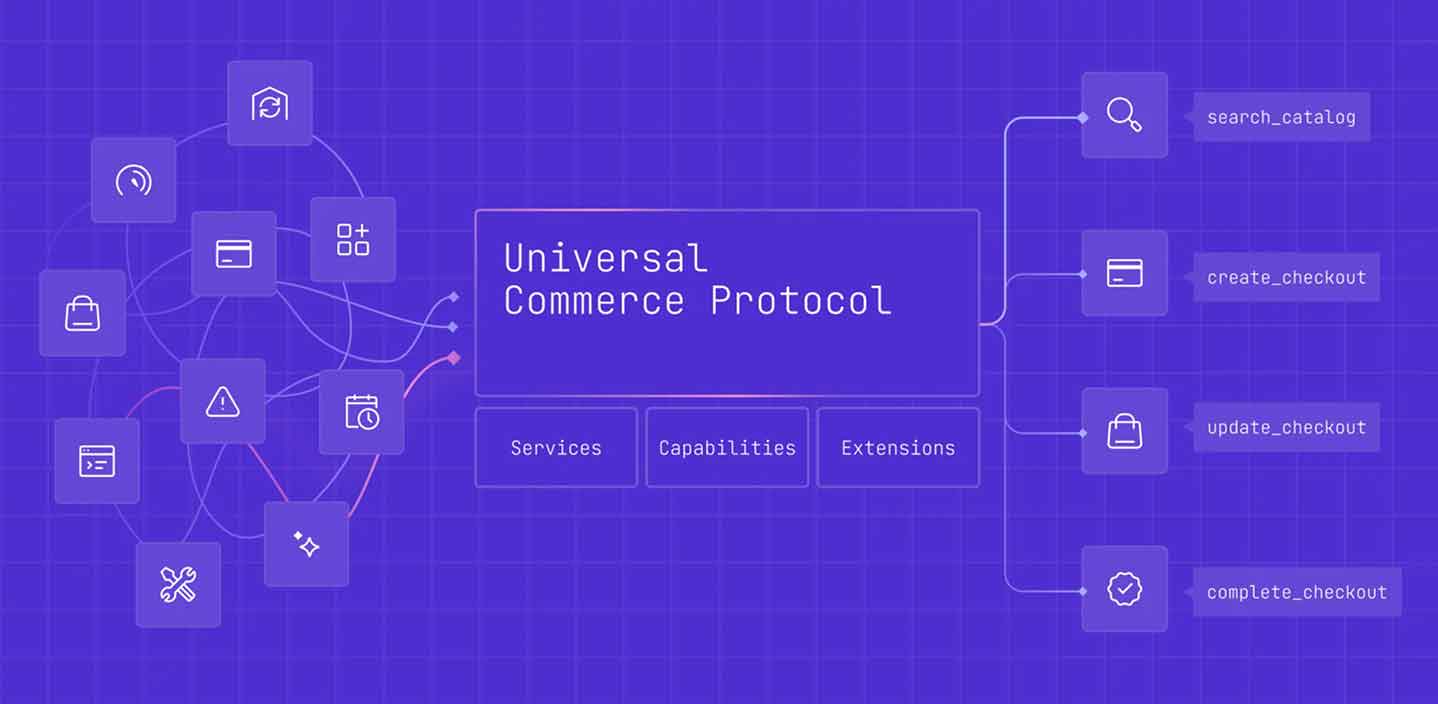
Source: Shopify Engineering Blog 2026
What’s converting
The honest answer: Discovery, not transactions.
Consumers have adopted AI shopping quickly for research. AI influenced an estimated $14 billion in Black Friday 2025 online sales. Fifty-three percent (53%) of 2025 consumers used AI tools in their shopping journey, according to Adobe’s survey of 5,000 shoppers. And 64% plan to use AI chatbots for shopping in 2026.
$14B
AI influenced Black Friday online sales in 2025
53%
Of U.S. consumers report using AI tools in their shopping journey
64%
Of U.S. consumers plan to use AI chatbots for shopping in 2026
But in-chat purchasing hasn’t landed yet. OpenAI launched Instant Checkout in September 2025 and pivoted away from it in March 2026 due to low conversion. Users were happy to research inside ChatGPT but completed purchases on sites and marketplaces they already trusted. Etsy had to cover OpenAI’s commission fees just to keep the ecosystem going. The core problem: Instant Checkout was limited to select enrolled merchants, and consumer trust in AI-mediated payments wasn’t there.
The trust data further explains it. Three-quarters (76%) of consumers are concerned about how chatbots use their data; 60% don’t trust them with payment information; and 63% are concerned about AI shopping scams.
Then on June 10, 2026, Visa embedded its payment network directly into ChatGPT. That addressed the merchant coverage problem directly. Where Instant Checkout required individual enrollment, Visa’s integration extends purchasing capability to any merchant that accepts Visa.
So, the infrastructure constraint is being solved at network scale. But the trust constraint is not. Visa’s own chief product officer said most transactions will still require human approval at launch, with the expectation that comfort builds through repeated use over time. In other words, remedying infrastructure problems and trust problems will occur according to different timelines.
What this means for your brand
Most mid-market brands will look at agentic commerce and have one of two reactions. Some will sprint to integrate with every platform that will take them. Others will dismiss the whole category as overstated.
Both approaches are mistakes.
The right posture is one of selective preparation. The infrastructure for agentic commerce is real and worth getting ready for. The consumer behavior necessary is not there yet for most categories. The brands that win this transition will treat it as a multi-year build, not a quarterly campaign.
That means selective preparation calls for three things in the near term:
- Get the discovery hand-off right.
When AI sends a customer to your site, do they land on the right product? Does the name in the AI summary match what’s in the cart? Can they check out on mobile in three steps? This is where the biggest near-term wins live, and most brands aren’t doing it well. - Pick your protocol surface.
ACP (ChatGPT) is conversational; UCP (Google) is a high-intent search. Amazon is its own thing. You don’t need to be everywhere. You need to know where your customers actually shop and prioritize accordingly. - Build for trust.
Strive to establish consistent product information across channels. Clear policies. Responsive review management. The brands that will be trusted in agentic commerce are the ones already showing they can be trusted everywhere else.
The bigger picture
McKinsey projects $3 trillion to $5 trillion in global AI-orchestrated retail revenue by 2030. That number gets quoted often and sometimes too loosely. The actual framing from their October 2025 report is more careful: The shift toward agentic commerce will be faster than web or mobile commerce revolutions were because AI agents can use existing digital commerce infrastructure rather than waiting for new rails to be built.
The Visa announcement is a data point for that prediction. Payment network infrastructure that took decades to build is being plugged directly into AI interfaces. The protocols and platforms are ready. The consumer habits are forming. So, the brands that prepare their data, their hand-off, and their trust architecture now will compound their advantage when consumer behavior catches up.
That window of opportunity is real. But it won’t stay open forever.
Want a deeper dive on agentic commerce?
Read our white paper on Agentic Commerce: When AI Acts on Behalf of Your Customer breaks down ACP vs. UCP, the Amazon Rufus dynamic, the consumer trust data, and a 30-day readiness diagnostic for mid-market brands.
Want to talk to an expert? Contact us and we can chat.
Modern Impact is a Brand Performance Agency helping mid-market brands grow smarter. Our AI readiness practice covers strategy, data architecture, and ongoing optimization across AI discovery channels.
